Loading...
Serving Santa Clarita, CA and surrounding areas. (661) 404-1293
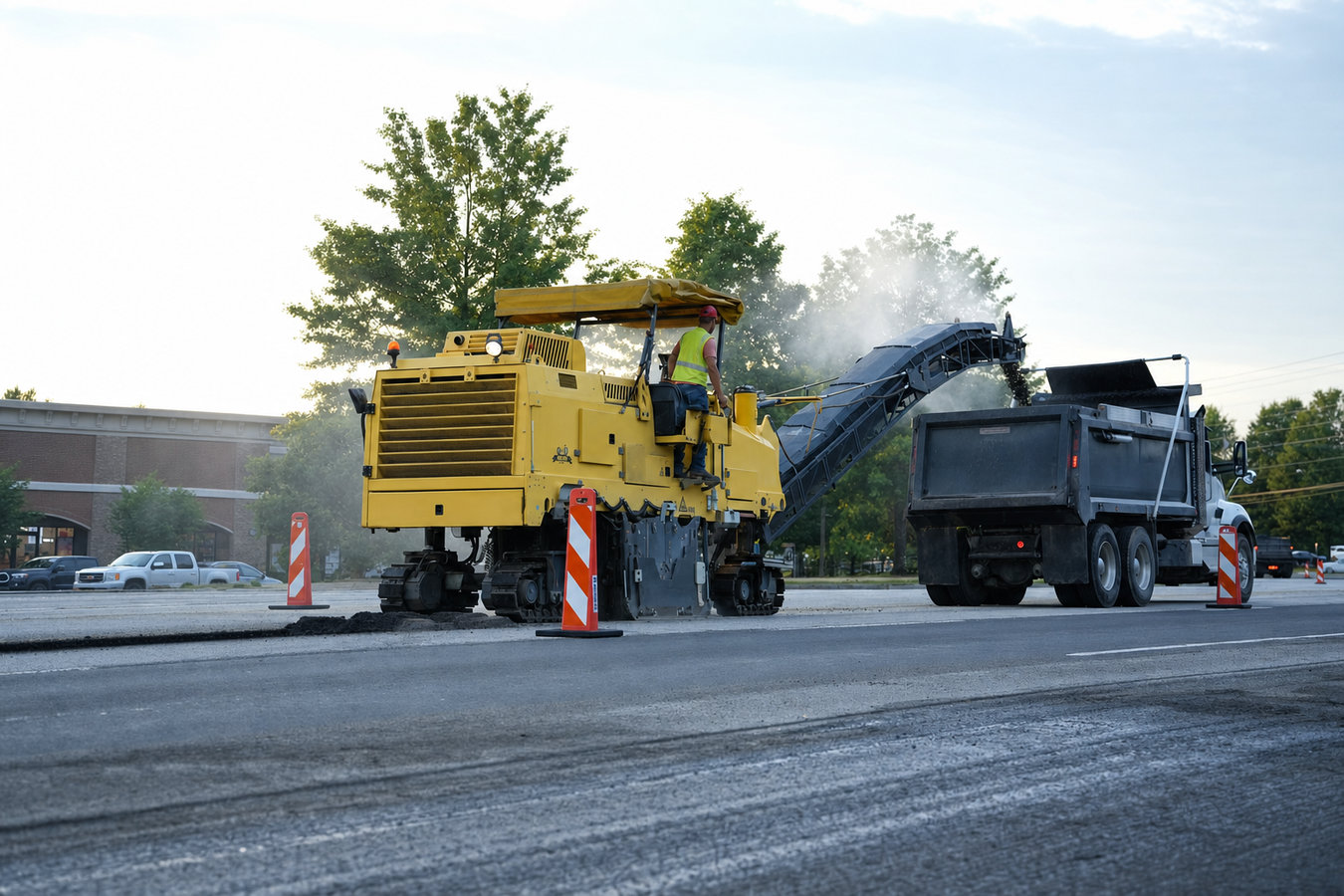
Patching over a failing driveway just delays the real fix. Milling grinds down the damaged layer and gives you a fresh, solid base for asphalt that actually lasts.
Asphalt milling in Santa Clarita is the process of grinding down the damaged top layer of a paved surface using a machine with rotating cutting teeth, removing the failed material and leaving a clean base ready for fresh asphalt, with most residential driveways milled in a single morning.
If your driveway has widespread cracking, ruts, or low spots where water pools after rain, a patch or overlay traps those problems underneath. Milling removes the failed layer entirely so the new pavement bonds to a solid, correctly graded base - and the result holds up far longer than a cover-up job. In Santa Clarita, where intense summer heat accelerates asphalt oxidation and clay soils shift seasonally from below, that base inspection after milling is not optional - it is what determines whether the new surface lasts or fails early. For the full resurfacing picture, our asphalt resurfacing service covers the overlay and compaction work that follows milling.
The milled material is not waste - it is reclaimed asphalt pavement that gets hauled to a recycling facility and used in future paving projects. Choosing milling over a full tear-out is the more practical and environmentally responsible option in almost every case.
When cracks have spread across most of the driveway rather than appearing in one or two isolated spots, patching no longer makes economic sense. Milling removes the cracked layer entirely and gives you a clean starting point rather than a patchwork surface that will keep breaking down.
Standing water means the surface has lost its proper slope or developed low spots from settling. In Santa Clarita, even modest rainfall can work into those low spots and soften the base below. Milling lets the contractor re-establish the correct grade before new asphalt goes down.
If your asphalt develops ruts or feels spongy during the hottest months, the existing material has oxidized and lost its structural integrity. Santa Clarita's intense summer heat speeds up this process, and a surface that deforms under normal vehicle weight needs to be replaced from the top down.
Hairline cracks can be sealed, but once cracks open wide enough to collect debris and water, the damage is progressing into the base. At that point, repeated patching will not stop the deterioration - milling the surface and starting fresh is the more cost-effective path.
Our milling work starts with an honest on-site assessment. We walk the surface with you, explain what we see, and tell you clearly whether milling alone is sufficient or whether base repairs are needed first. For residential driveways where the base is sound, milling and repaving is often a straightforward one-to-two-day project. For larger or more damaged surfaces, we coordinate with our drainage solutions service when the root problem is grading or water management rather than the asphalt itself.
After the milled surface is swept clean, we inspect the base before any paving begins. If soft spots or soil movement are found - common in the Santa Clarita Valley given the clay soils - we address those areas before the new asphalt goes down. Skipping the base inspection is one of the most common reasons a new driveway fails in the first few years, and we do not skip it. For HOA communities in Valencia, Stevenson Ranch, or Saugus, we are familiar with the approval process and can advise on what your association typically requires before work starts.
Suits driveways with widespread cracking, ruts, or lost slope that have reached the end of what patching can address.
Suits areas where only a section of a larger surface has failed and the rest remains structurally sound.
Suits surfaces where clay soil movement or erosion has compromised the base and needs correction before repaving.
Suits projects where a new asphalt overlay is planned and the existing surface needs to be ground down to maintain curb and edge heights.
Santa Clarita regularly sees summer temperatures well above 90°F, with stretches above 100°F not uncommon. That sustained heat accelerates the oxidation of asphalt, making it brittle and prone to cracking faster than in cooler climates. A surface that looks moderately worn can actually be failing from the inside out by the time visible cracks appear. The clay-heavy soils across much of the valley add a second layer of complexity: they swell when it rains and shrink during dry stretches, pushing up against pavement from below. When those two forces combine - heat-accelerated surface degradation and soil movement from below - the result is exactly the kind of widespread, recurring cracking that milling and proper base repair is designed to address. If your driveway was exposed to wildfire smoke or ash in recent years, that debris can also settle into cracks and accelerate deterioration - worth mentioning when you call for an estimate.
We serve all of Santa Clarita, including communities like Canyon Country where many driveways date to the 1960s and 1970s and have gone through decades of heat cycles, and Stevenson Ranch where newer HOA neighborhoods have specific requirements about surface appearance and equipment access hours. We plan each job around the conditions at your specific address.
Call or message us to describe your surface and its condition. We schedule a free on-site visit to measure the area and assess the base - do not trust any contractor who quotes a firm price without seeing the job. We respond within 1 business day.
We walk the surface with you, point out areas of concern, and explain whether milling alone is sufficient or whether base repairs are needed first. This is when you get a clear, written quote and understand exactly what is included.
The milling machine makes systematic passes across the surface, cutting the old asphalt to a precise, even depth. The material is loaded and hauled away for recycling. The crew then sweeps and blows the surface clean - expect noise and some dust for a few hours.
Once the old surface is removed, we inspect the base and repair any soft spots or soil movement before paving. Fresh asphalt is laid, spread, and compacted. Stay off the surface for the time your contractor specifies - typically 24 to 48 hours, possibly longer in summer heat.
Free on-site estimate, no obligation. We respond within 1 business day.
(661) 404-1293California requires paving contractors to hold an active state license. Ours is current and verifiable through the California Contractors State License Board at cslb.ca.gov. We also carry full liability and workers' compensation insurance - you should confirm both before any contractor sets foot on your property. cslb.ca.gov
We probe the base after milling before any asphalt goes down. Given the clay soils common in the Santa Clarita Valley, soft spots and soil movement are not rare - they are expected. Addressing them before paving is the step that separates a surface that lasts from one that fails again in two years.
Our affiliation with the National Asphalt Pavement Association keeps us current on industry best practices for milling and paving. The milled asphalt we remove from your property is recycled - it does not go to a landfill. National Asphalt Pavement Association
We have worked in HOA communities throughout Santa Clarita - Valencia, Stevenson Ranch, Canyon Country, and Saugus. We know what approvals are typically required before noisy equipment shows up, and we navigate that process so you do not have to.
We give you a written estimate that explains every line item. The price you are quoted is the price you pay - we do not add charges after the work begins.
When grading and water runoff are part of the problem, drainage work addresses the root cause before new pavement goes down.
Learn MoreA fresh overlay on a properly milled base - the next step after milling for driveways and parking areas ready for new asphalt.
Learn MoreCall now or submit online - we respond within 1 business day and walk your surface before quoting anything.