Loading...
Serving Santa Clarita, CA and surrounding areas. (661) 404-1293
Pooling water on your driveway or runoff from a hillside lot will shorten the life of your asphalt fast. We design and install drainage systems that move water off your property and keep your pavement solid.
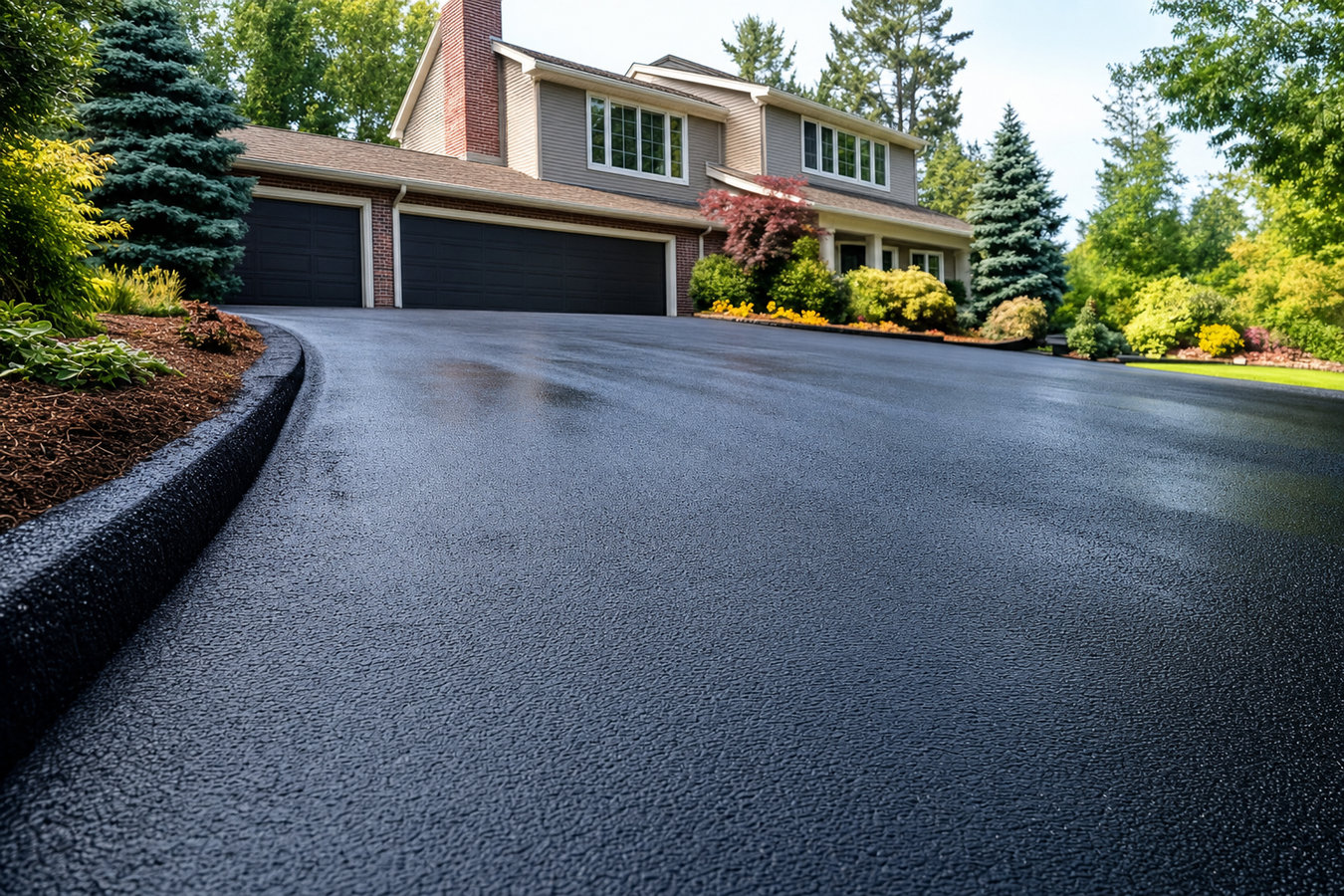
Drainage solutions in Santa Clarita are systems built into or alongside a paved surface to move water away quickly - including channel drains, catch basins, surface regrading, and underground pipe - and most residential jobs are completed in one to two days.
If you're watching water sit on your asphalt after a storm, or finding mud washing across your driveway after every rain, your surface isn't moving water the way it should. Santa Clarita homeowners on hillside lots in Canyon Country and Saugus deal with this regularly - water from slopes above has nowhere to go but across your pavement, and it carries the base layer away a little more each season. The damage compounds quietly until cracking and sinking make the problem obvious.
Drainage work pairs naturally with grading and excavation because reshaping the ground around your pavement is often the most direct way to solve a runoff problem at its source. Getting both right in the same visit saves time and avoids having to cut into finished pavement later.
If water pools on your asphalt after even a light storm, your surface isn't directing runoff the way it should. In Santa Clarita, rain arrives fast and in volume - standing water has little time to evaporate and instead soaks into the base layer, starting a cycle of softening and cracking.
Dirt, gravel, or muddy streaks on your driveway after rain mean water is crossing your property without a controlled path. This is especially common on hillside lots in Canyon Country and Saugus, where runoff from slopes above has nowhere to go but across your pavement.
Cracks that appear without obvious cause, or areas where pavement feels spongy underfoot, are often caused by water weakening the base. If these spots cluster near the low end of your driveway or at the base of a slope, poor drainage is almost certainly the culprit.
Water pooling against your garage door or home foundation is a serious warning sign. Your asphalt should slope away from the structure - if it's directing water toward the house instead, a drainage correction is overdue.
We assess each property individually because drainage problems rarely have a single universal fix. Surface regrading - reshaping the pavement so water flows toward a safe outlet - solves many straightforward cases where the existing slope is simply wrong. For driveways with a consistent low spot where water collects, a trench drain or channel drain set across the width of the driveway intercepts runoff before it reaches the garage or foundation. More complex situations call for a catch basin at the lowest point connected to underground pipe that carries water to a safe discharge point. When underground work is involved, we always check for utilities before excavation. Our grading and excavation work often runs alongside drainage projects, since reshaping the soil around your pavement keeps water from concentrating in the first place.
After any drainage installation that requires cutting and removing asphalt, we repave the disturbed area so it matches the surrounding surface and the drain sits at the correct elevation. If the surrounding pavement has also suffered water damage, we can pair drainage installation with our other paving services to handle everything in one visit. For the California Contractors State License Board license verification standard in this state, you can confirm any contractor's active status at cslb.ca.gov.
Best for driveways and lots where the pavement slope is directing water the wrong way - a relatively quick fix that doesn't require cutting new channels.
Suited to driveways with a consistent low point across the width - intercepts surface runoff before it reaches a garage door or foundation.
The right choice for larger volumes of runoff or hillside lots where surface measures alone can't handle the flow - collects water at low points and moves it underground.
For properties downslope from recently burned hillsides, where standard drainage may not be sized for the increased debris-laden runoff that burned slopes produce.
Santa Clarita sits at the western edge of the Mojave Desert's influence and stays dry for most of the year - then gets hit with concentrated winter rain between November and March. Because the ground is baked hard and compact through the dry season, it absorbs water slowly. When a decent storm arrives, even well-maintained soil can't keep up, and the runoff is substantial. The clay-heavy soils found across much of the valley make the situation worse: dry clay actually repels water initially before slowly absorbing it, so the first big rain of the season produces the most surface flow. Homes on hillside lots in Canyon Country face this challenge every winter, with runoff accelerating downhill toward driveways and garages. The hills surrounding the city have also experienced significant wildfires over the years, and burned slopes shed water and debris far more aggressively than vegetated ones - a risk for any property downslope from recently burned terrain. For general information on storm drainage and water quality standards, the U.S. Environmental Protection Agency publishes guidance on stormwater management that applies to residential and commercial properties.
A large share of Santa Clarita neighborhoods - particularly in Stevenson Ranch - are governed by HOAs with rules about drainage features visible from the street. Modern channel drains and catch basins can be set flush with the pavement and are barely noticeable, which satisfies most HOA appearance requirements while still doing the job. If your association requires written approval before any grading or drainage changes, check with them before scheduling work - your contractor can provide a spec sheet to support the process.
Reach us by phone or the contact form. Describe where water collects and whether it's a new problem or has been building over time. We respond within one business day and schedule a site visit.
We walk the property, identify where water enters and where it needs to go, and measure the site before giving you a written estimate. We explain exactly why we're recommending a particular approach and what each option costs.
If the project requires a permit - common when connecting to a public storm drain or making significant grade changes - we handle the application and let you know how it affects the start date. Permitted work is inspected, which works in your favor.
The crew excavates, sets the drain or pipe, backfills, and repaves the disturbed area so it matches the surrounding surface. Before leaving, we walk the finished area with you and confirm the drain elevation is right. Keep vehicles off fresh asphalt for at least 24 hours.
Free on-site assessment. Written estimate before any work begins. No pressure.
(661) 404-1293The clay-heavy, expansive soils common across this valley shift seasonally and can move drain pipes out of alignment. We select pipe materials and set drain elevations with that soil movement in mind, not a one-size approach from outside the region.
Sloped lots concentrate runoff, and a simple surface slope often isn't enough. We've sized channel drain systems for the actual flow hillside properties produce in this area - not an estimate based on flat-lot math.
Drainage work that involves cutting, removing, and repaving asphalt must be done by a licensed paving contractor. Our California contractor's license is active and verifiable at the state licensing board, giving you legal protection before any work starts.
Many Santa Clarita communities in Valencia and Stevenson Ranch require written HOA approval before any drainage work alters grading or visible surface features. We can provide a simple spec sheet or diagram to support your approval process.
Drainage work done right the first time saves you from repeatedly repairing the asphalt damage that poor drainage causes. We combine local soil knowledge with licensed paving work so the fix holds through Santa Clarita's seasonal wet-dry cycle year after year. The National Asphalt Pavement Association sets the industry standards for drainage integration with asphalt surfaces that guide how we approach every job.
Add permanent asphalt speed bumps to your driveway or private road after drainage work is complete - both services work well together as a single paving visit.
Learn MoreReshape the ground around your pavement so water naturally flows away from your structure rather than concentrating against it.
Learn MoreWinter storms don't give much warning - get a free on-site estimate now and go into the season with a driveway that's ready to handle whatever comes.